
Heavy load preferable
philomaths.tech
Follow on Instagram, X, LinkedIn. Brand built with achoo studio
Newsfeed: to help you track what’s happening in Baltic tech and global tech that matters to builders here. No algorithms. No AI-curated feed. Just people who build things, following other people who build things, and surfacing what’s worth your attention.
editor@philomaths.tech
The summer – and we still love thinking what problems startups can and should solve, and moats they create. In that front, thrilled to welcome Ovoko and Eneba, two impressive scaleups, as supporters of Tech Philomaths. Top talent are joining them as they scale rapidly, showing true category leadership.
Darius also reminded us that the most scarce resource today are the founders — and we need to find them beyond the borders. On that note, sharing a powerful interview with Avery, Founder and CEO of Modash. This Canadian founder landed in Estonia with no contacts, no capital, and no concept - but his influencer marketing platform now expanding, grows faster each year and earns more than ever raised (investments were around $14M).
work in progress
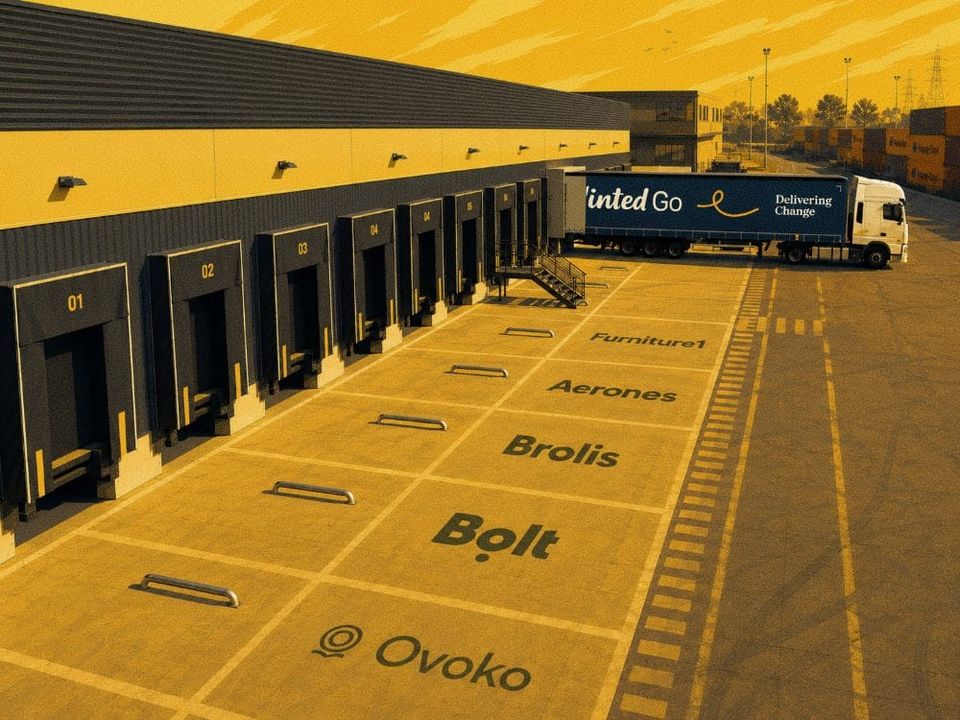
Problems to solve. A16Z announced big come back of Travis, Uber founder - backing Atoms, robotics AI company with $1.6B. Ben Horowitz writes that Travis spent last decade with CloudKitchens to "discover all of the primitives and patterns for how people make, store, and move things for other people, and learn how to build a computer for the physical world”. (We also spotted ex Uber engineers with this team in Vilnius, years back). This makes us think about Baltic companies that are rising with complex products, but alongside - very durable moats. They have spent years plumbing issues that makes product possible, including infrastructure, hardware, logistics, payments, and trust. Now it is super hard to compete with the likes of Vinted, Bolt, Ovoko, Aerones, Brolis Defence, Furniture1 and others - simply because “the value of a company is the sum of all problems solved” (Spotify's co-founder).
AI intermediation. As Stripe is rumored to acquired OpenRouter at $10B, this rhymes with nexos.ai and condense.chat - the intermediation layer might be very much alive. All three monetize the same three facts: models are many, expensive, and someone has to sit between the app and the model. In similar vein, CAST.AI arbitrages GPU/compute - and growing very well.
Social / consumer. The graveyard of startups in the field is huge, but it's always exciting to watch who might redefine what we consume. Yope from Poland lands $12.3M from Northzone's PJ for "private social platform. No algorithms. No ads. No public content. Just micro-communities, small groups of friends sharing unfiltered moments". Already 15M users.
In consumer, Baltic founders seem to drive ecommerce most successfully. With Burga's huge factory opening (now can do 60k items A DAY), we were asking you what products shall they produce next? So far premium travel gear leads (pet luxury much behind).

Gabriele started Doges - "the app for dogs who walk their humans”. Kiloverse hiring growth lead for Wordletic - language learning app. As Pocket raises 11M from Accel, we are reminded about the rise and moats of Fieldy. Flo now has fully branded Vilnius’ office, over 200 people there.
AI, large and small. Kimchi coding is GA now by CAST.AI. Soro is new product growing fast. Jevgeni, Estrid co-founder, starts new venture. Katana EPR going all-in with AI. Some SHIPYARD teams, startup ideas seem to have repeating patterns - easy to get inspired and bring to other industries or domains.
Defence. Brolis’ tender win in CZ is pretty large - EUR 78M. No wonder the PE acquisition was described as largest in the Baltics in defence so far. Valkyrie is one to watch / track. More in dual use, AISPECO closed 2025 profitable, EUR 3.5M revenue. Audrius introducing Mainline.
Oxylabs founders. Oxy factory has been producing a lot - including alumni founders. Adomas and Rasa just launched LinkPicker. Tadas has been building a lot – former scrapping engineer, he is now driving topYappers, influencer marketing platform.
Never heard of? List of overlooked B2B SaaS Lithuanian startups, bootstrapped or raised very little funding, approaching/passed 1M ARR.
People moves. Ex-Meta, Marius is open for new: Head of, Director or VP level in B2C marketing effectiveness, measurement and/or analytics roles. Lukas joins Mintos as real estate lead. Agne returns to Vinted. Contrarian summer interns, they are known to attract very smart young people. Karolis looking for software engineer gig. Marius joins Holo AI. Sigita joins Eldorado influencer marketing team.
sponsors
Cloudvisor [now offering stress-free migration from any cloud to AWS]
Hostinger [online presence accessible to everyone worldwide, hiring]
Google For Startups [cloud credits up to $350K, faster growth]
Ovoko [join to transform Europe’s €30B+ used car parts market]
Oxylabs [Step into the world of web data gathering]
VIALET [Business accounts for growth, hiring]
Surfshark [Top 50 among fastest growing in EU, hiring]
Eldorado.gg [world’s largest in-game trading marketplace, hiring]
Eneba [join the marketplace 20M gamers love]
InRento [Investments in real estate projects with income, growth, and impact]
rounds and capital
European Technology Group (ETG) announced the acquisition of Lightning Reach, fintech-for-good platform helping people access financial support through a single digital journey. Ignas Velza has been building Lightning as the CTO - big congrats!
Robotics Academy secured EUR 500k debt for growth, including US.
three questions
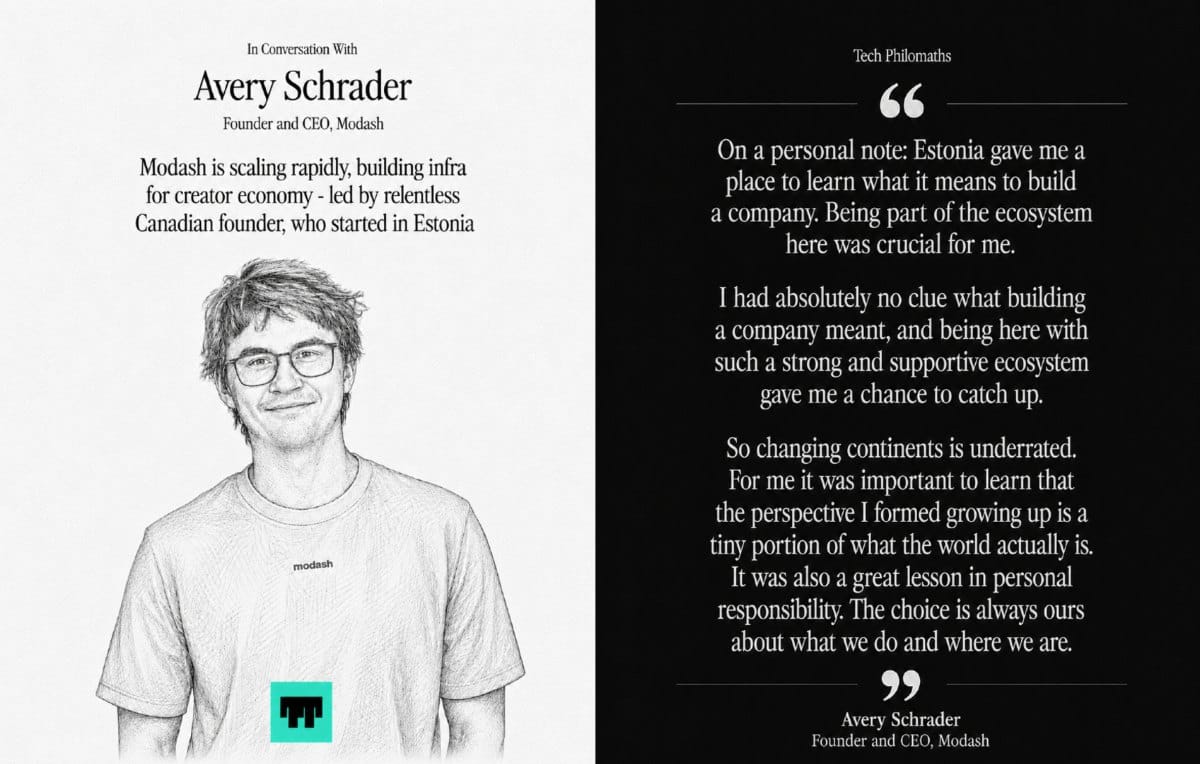
Canadian founder Avery landed in Estonia with no contacts, no capital, and no concept. Modash now serves 2,500+ companies and earns more than it ever raised – accelerating, too.
Modash is scaling aggressively — where's the company today, and what are your top priorities right now?
Modash is now used by more than 2,500 companies to build and scale creator partnerships. We're around 90 people, our revenue is already larger than all the money we've ever raised, and we grow faster every year.
I think the world kind of sees that the creator economy is the future, but even with ~$40B in spend growing ~30% annually, our space still feels early. All of your favourite brands partner with creators and want to find ways to deploy even more there. Unilever's new CEO famously said he wants "an influencer in every Zip code in the globe." Modash is going to own this space before everyone looks up and realizes it's the defining growth channel of the next decade.
The biggest priority at the moment is hiring the best possible people to build the next phase of the company.
To give a more practical set of challenges: our customer base is changing. More and more household names want to use Modash at a scale we haven't seen before. That's testing every part of our business, and there are some things we can't let slip even when it hurts like hell. We need to maintain a great customer experience, stay disciplined about hiring people who add momentum, and stay focused on the core problems we set out to solve.
To let any of that stuff slip while we grow will be an irreversible error.
You moved to Estonia to start a company with no contacts, no capital, and not even a real concept. Would Modash have happened anywhere else? And more broadly — should more founders be moving somewhere new for that kind of fresh start?
Estonia and Europe mattered a lot for Modash. If you're trying to scale something, you need to be in a place that gives you some advantage. The region offered close proximity to scaling consumer brands (Bolt, Wise, NordVPN, Wolt, Burga). It also had very little meaningful competition, and some of the problems we solved were more painful because of the fragmented markets here.
To keep finding that advantage, you'll almost certainly need to move at some point in the journey. Tallinn is my home base, but I spend more time in North America every year. We also relocated a founding team member to North America. He understands Modash as well as I do. Without him physically there, it would be unacceptable for me to be this far away from our largest market and our growing teams.
On a personal note: Estonia gave me a place to learn what it means to build a company. Being part of the ecosystem here was crucial for me. I had absolutely no clue what building a company meant, and being here with such a strong and supportive ecosystem gave me a chance to catch up.
So changing continents is underrated. For me it was important to learn that the perspective I formed growing up is a tiny portion of what the world actually is. It was also a great lesson in personal responsibility. The choice is always ours about what we do and where we are.
So I don't know if Modash would have happened somewhere else, but I'm pretty sure I would not have become the same founder somewhere else.
<...> Full interview here
roleplay
VIALET - Merchant Underwriter + more
Eldorado - Product Owner, Google Ads Manager + other
Hostinger - Head of Product, Head of FP&A
Cloudvisor - Cloud Sales & Alliance Manager
Eneba - Head of Finance, Head of Engineering, Influencers manager
Oxylabs - Chief of Staff
Ovoko - Director of Design, Head of Marketing
Soro - Software engineer, CS, Performance Creative, other
Newrails - AML Specialist
Neo Finance - CTO
Pando Moto - Influencer and Affiliate Marketing Managers
Laelaps AI - Founding Account Executive
brand + design
Who builds the next ten Lithuanian unicorns? Darius raised an important question. Here’s an additional angle. We need to treat talent attraction as a storytelling and brand-building problem as much as a policy one.
Visas and tax incentives are necessary. But they're rarely the reason why talented people move to a certain city. They move to places that feel alive with possibility - where ambition is celebrated, serendipity happens by design, and the most interesting problems are being solved. We barely tell that story.
Ask young people anywhere in Europe if they know Vinted or NordVPN. Most of them do. Now ask how many know these are Lithuanian companies. Almost none.
The substance is there - ecosystem value up 39x in a decade to €20B+, Vilnius the fastest-growing tech city in the EU, nearly 30 startups founded by Vinted and Nord alumni. The story is still not traveling with it.
Lithuania is excellent at the investor story: metrics, multiples, capital efficiency. It works. That's partly why capital is no longer the bottleneck. But talent doesn't relocate for a pitch deck. US founders understand the difference.
Policy opens the door. The story is what makes people walk through it.
founder's guide
Need to talk about exits? All Baltic founders who had an exit 2026. Here is fresh Povilas’ post about launching Spike and the acquisition.
How Gustas keeps pushing the limits - now with a swim France to Italy through the Strait of Bonifacio.
Member discussion