
Anti-fragmentation

Brand built with achoo studio, check philomaths.tech
Follow on Instagram, X, LinkedIn
Notify when we have new sponsor slot available? Leave email here.
Read this issue online - here
editor@philomaths.tech
Happy Independence Restoration Day, Lithuania!
Time flies, so spend it wisely. 20 years ago today, Milda Mitkute was still having too many clothes, but Vinted would only be launched two years later, when she had to move apartments. Tesonet / Nord Security founders have been still tinkering with some of the 34 failing projects, before starting Nord in 2008. For Hostinger, Hosting Media was already live, and in 2007 they launched 000webhost, a free hosting platform that became massively popular with beginners building websites. And twelve years ago, 2014, Ovoko co-founder Justinas bought an auto scrapyard in Siauliai and started new spreadsheet...
work in progress
Anti-fragmentation. Pattern from some most impressive marketplace players scaling: 1) pick a promising fragmented European category 2) build infrastructure and break barriers, start scaling both supply and demand. Yes this is Saltz – just closed EUR 20M Series A, as well as Ovoko and Vinted (now EUR 8B worth as BlackRock is buying EUR 574M worth of shares).
Solving fragmentation doesn't always need to be a marketplace – think also about the likes of Estonian Mifundo (platform linking national credit databases across Europe) or Axiology (capital markets).
Context becoming everything? Anyone else tired of uploading files and asking LLMs "to find that previous chat"? We are bullish for Fieldy 3 wearable release, and their acceleration. Others that have data / context advantage are Desktop Commander, and nexos.ai – which just launched "limitless campaign" and platform to run agents for everyone.
Agentic and autonomous. Albertas is live with Crush – and what a background of a founder, guy is a little bit competitive! Mantas and Nedas built ResolveKit — a platform that brings a real AI support agent directly into your app.
People. Ilma (ex-MailerLite) launched Blue Fondue: a production house designing intimate, participatory experiences. Five years since Vytautas joined Tesonet Investment team – been busy! Deividas in now Head of Drones at RSI Europe. Edas' Chapter two – Motifind learnings and building more products. Arminas is now Head of Payments at Eldorado.
Privacy / security. By the creators of Surfshark: HeyPolo is a new way for families and friends to stay connected in the real world; Edvinas will be the CEO. NordLayer launched a business browser.
Your calendars. Entrepreneurs First scouting in Vilnius and Tallinn, events (Mar 31 / Apr 1).
sponsors

Cloudvisor [now offering stress-free migration from any cloud to AWS]
Hostinger [online presence accessible to everyone worldwide, hiring]
Google For Startups [cloud credits up to $350K, faster growth]
Oxylabs [Step into the world of web data gathering]
VIALET [Business accounts for growth, hiring]
Ace Waves [Enterprise ready AI agents for CS, hiring]
Surfshark [Top 50 among fastest growing in EU, hiring]
15MIN Group [all the news you need to know]
Eldorado.gg [world’s largest in-game trading marketplace, hiring]
Saily [eSIM data for international travel, hiring]
rounds and capital
- FIRSTPICK launches EUR 25M fund, in style – with top investors flying in and great event for the community. Great run so far, awesome to see continue.
- Saltz, food supply marketplace, raised €20M in Series A funding from EBRD, Inovo, Lifeline Ventures, and Change Ventures to expand across Europe and transform food distribution. See interview below
- Iron Wolf Capital joins massive $50 million UFORCE round: it emerges from stealth with backing from multiple VC funds including Lakestar, Shield Capital, Ballistic Ventures, and others. UFORCE is led by Oleg Rogynskyy (co-founder People.AI), founder is Oleksiy Honcharuk, a former Ukrainian prime minister, and board member includes Ben Wallace, the former UK defence secretary.
- Finbee secures EUR 5M investment by Tesonet. Expect Finbee to grow way faster, enter new markets, accelerate both marketing and product development.
- Dr. Zabieliauskas pledges to donate EUR 100K to Vilnius University Endowment.
- Lost Astronaut backs Lynxmonadas, another drink venture.
roleplay
Saily - all categories - 30+ positions
Hostinger - Emerging Channels Growth Lead + Engineering Manager
Surfshark - Senior Android Software Engineer (HeyPolo)
Eldorado - Head of Engineering, Fraud and Risk Manager
Oxylabs - Head of Customer Experience + many
Cloudvisor - Outbound sales
VIALET - Backend Engineer + Lawyer
Google Cloud - Multiple roles in the Baltics
ConnectPay - Sales Executive
Adment.ai - AE
Sintra - Head of Growth
three questions
Saltz.app is on fire - just closed €20M Series A! Thrilled to talk with the founders, famous for previous exit with Oberlo. Read online here.
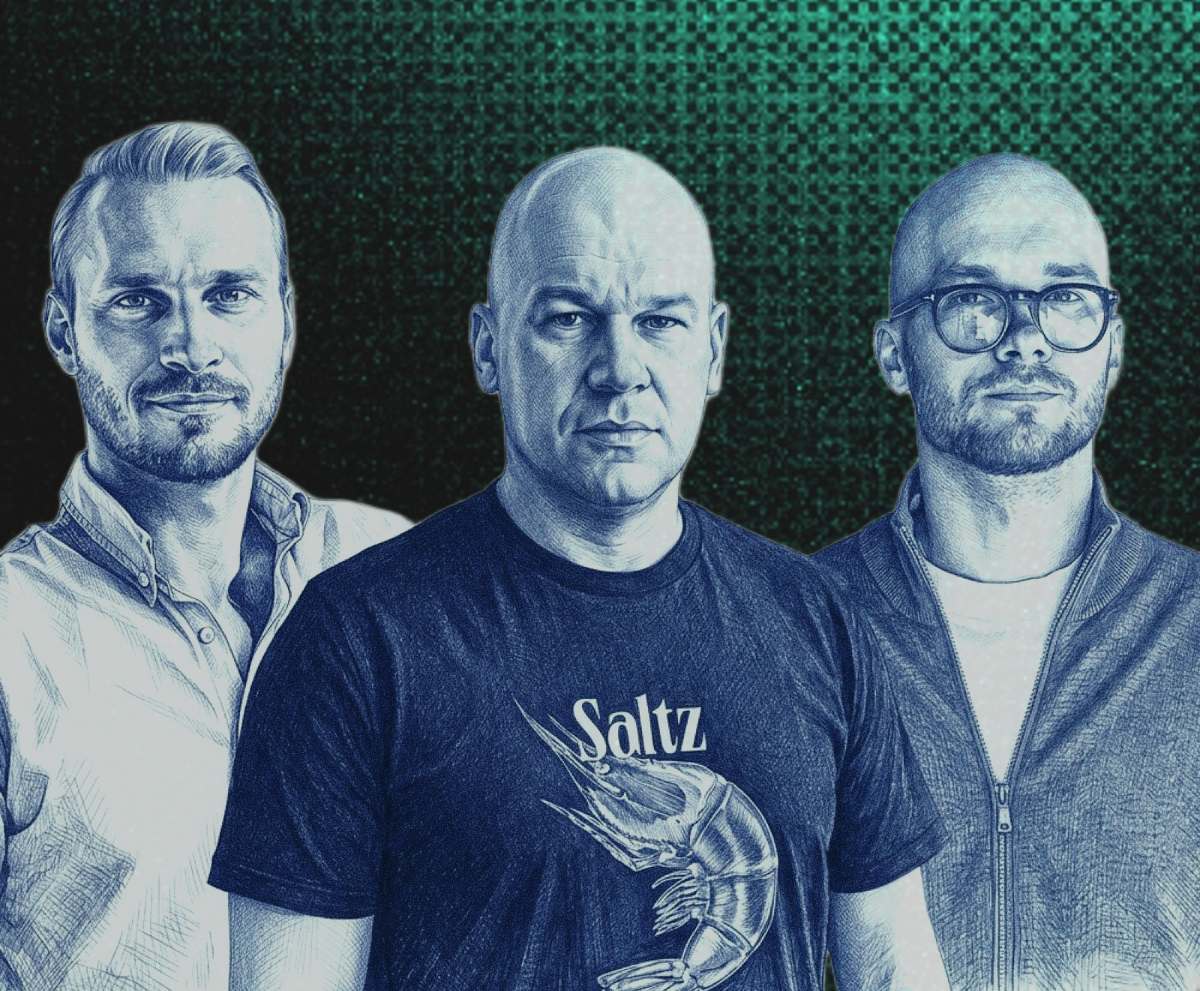
Multi-sided marketplaces are hard to scale. What bottlenecks genuinely surprised you?
The biggest surprise is how behavioral the challenge is.
Restaurants and suppliers often operate on long-standing routines – phone calls, WhatsApp messages, standing orders. Changing those habits takes time.
But what we see consistently is that once a chef tries Saltz and experiences the convenience and price transparency, they rarely go back.
Saltz and Oberlo are quite different animals. With one exit behind you, how do you approach building this one differently?
Oberlo was fundamentally a software layer on top of an existing ecosystem.
Saltz is much more infrastructure. We're rebuilding parts of how the food supply chain works – supplier onboarding, logistics network coordination, pricing aggregation, data, ordering workflows. We’re building systems that can support thousands of restaurants ordering daily.
Upcoming 100+ hires: are you going to be heavily distributed, with sales/ops people in every market?
Our approach is a mix:
- Local field teams that build restaurant relationships
- Centralized R&D and marketing teams
We want the customer experience to feel local, but the infrastructure behind it to scale globally.
You're deep in European supply chains now, do you see other sectors ripe for the same opportunity, or is food uniquely broken?
Food is uniquely fragmented. You have tens of thousands of small suppliers, daily purchasing, volatile pricing, and almost no modern procurement infrastructure.
Most restaurants still order via phone calls, PDFs, and WhatsApp messages. So the opportunity is enormous.
brand + design
Design Special Forces. Shopify acquired Molly, a design studio - calling its own “Navy SEAL” squad. Last time tech started swallowing design studios was 2011–2018 - Facebook, Google, Apple, all went shopping. Treatwell acquired LemonLabs. That wave coincided with what’s considered the peak era of software quality. The playbook is back: you don’t hire taste one designer at a time. You acquire it as a culture.
The rise of the Super IC. Lean teams are raising the bar. Companies increasingly look for someone who can own outcomes end-to-end: set direction, make decisions without committee drag, and ship. They want “Super ICs,” senior individual contributors who can think through product strategy, design, and engineering - and build when needed.
founder's guide
Analyzing twenty founders who started $5B+ companies at or before the age of 23. What is the pattern?
I think it comes down to three things. Trauma. Neurodivergence. Polymathic range. Read these twenty-five profiles back to back and the pattern is unmistakable. Nearly every founder carries at least one. The best carry all three.
further insights
- Very interesting read: 60 New Yorkers on how much they made last year
- Daytime napping is associated with a larger total brain volume.
- Play around with public SaaS metrics
Member discussion