
What survives the noise

philomaths.tech
Follow on Instagram, X, LinkedIn. Brand built with achoo studio
editor@philomaths.tech
We learned Tomas' and Eimantas' mIRC nicknames, and uncovered the very origins of Tesonet — European success story behind two bootstrapped unicorns. Our first long-form.
World keeps getting messier. On top, outages and systems getting hacked. But as we reflect on Plural’s new fund, ramping of CUBE, or OBDeleven journey — we are getting much better signal on what to build, what matters, what scales.
work in progress
Unreported (huge round). Late September, we talked with Einaras, noticing CUBE AI accelerating. While not announced publicly — SEC fillings from September seem to show approx $43M in new funding, including who are new director, and may have led the round. Congrats — this is well beyond PMF, scaling quickly and hiring top talent. Cube produces intelligence on where scammers collect their money and gets it to banks and payment providers before the victim's transfer clears.
Reported (huge fund). “Our founders are tackling the hardest challenges of the planet. Europe, something big is happening”. That’s Plural with a new, EUR 1B fund. Massive congrats to the team behind, and especially Taavet Hinrikus and Sten Tamkivi – co-founders who are raising European ambition from Tallinn.
B2B software but 2.0. Given CUBE is scaling quickly, what else is there in B2B software scale-ups —and alive? Lemkin revealed horizontal software giants struggling to win new customers, even if retention is good. That’s why Hubspot had to be “refounded”. What about Baltic B2B software plays? Unfortunately, Pipedrive’s growth engine broke similarly, thus massive cuts.
AI needs infra and data, so Source/Oxylabs and are Hostinger ramping ahead. Fakes and agents? Verifying / security needs drive Veriff and Ondato. Watch Blackwall ramping in cybersecurity, and CAST AI in cloud infra.
Vertical software can drive through limited competition and domain defensibility. PVcase launches new product - Concept - to lead solar engineers from promising site to confident project. Similarly, Solder is worth tracking, they also added €1.5M innovation loan in Estonia.
Riding marketplaces. We argue that Ovoko ESOP is underpriced, so you go join them and ask for good package (before coming rounds). If you are less risk averse, try joining Nevaziuoja (hiring at 1.2M ARR), looks like they raised funding — and climb up the ladder, too.
Defence. Anti-drone, pro-revenue. First we needed a ton of drones, that is partly solved, now how do we protect from them?? Hevi Optronics named company of the year in Estonia — already at 50M revenues at Q3 this year. Also in Estonia, Rantelon jumped to 27M rev already, again it is portable drone jamming equipment. Keep an eye on 3P-Defence, they do counter-UAV Laser Engagement System.
Don't call anyone at Eneba today –
Founders, including young ones. Timmu, Co-founder of Ready Player Me, is now in London, in stealth, and putting together robotics team. Juku is buidling AI-native workflows with two co-founders, and since he is 16, they “couldn't register the company ourselves, so our parents are the shareholders for now. When we turn 18, the shares get transferred to us”. ISM University just had Unfair Weekend, with Benediktas - 12 yr old - winning it!
Farms. Tomas, CTO at Podimo, shares how they built a remote agent farm solution reactor and how currently it operates ~60 remote micro-agents in production (generate around 100 merge requests under his name daily). Creem is also living the future — everyone has their own Mac mini with their own AI agent on it.
People moves. Sille Pettai joins Keen Venture Partners as Partner. Andres steps down from Roofit.Solar CEO role. Rytis, serial founder and executive in Berlin, closes his advizeo chapter. Aida joins Nord Security as Engineering Manager. Kestutis also joins Nord. Ryan will do fractional marketing role at Codemagic. Egle joins Ondato as Head of Brand. Povilas is open for growth and marketing leadership roles.
sponsors
Cloudvisor [now an official AWS Managed Services Provider]
Hostinger [online presence accessible to everyone worldwide, hiring]
Nord Security [join us and create what's next in cybersecurity]
Ovoko [join to transform Europe’s €30B+ used car parts market]
Source.ai [Step into the world of web data gathering]
VIALET [Business accounts for growth, hiring]
Surfshark [Top 50 among fastest growing in EU, hiring]
Eldorado.gg [world’s largest in-game trading marketplace, hiring]
Eneba [join the marketplace 20M gamers love]
InRento [Investments in real estate projects with income, growth, and impact]
rounds and capital
CUBE AI raised north EUR 40M round which is yet to be announced publicly.
Bulgarian Payhawk (also with Vilnius office) raised $280M Series C at a $2B valuation led by Goldman Sachs Alternatives - with Tesonet joining the round.
Cellbox Labs (Latvia) has been awarded up to €6.5 million in blended financing through EIC Accelerator programme.
Listed 9 Baltic startups (or at least Baltic founders) that raised more than 15M in a single round this year. Zygimantas wins cross-out quiz.
three questions
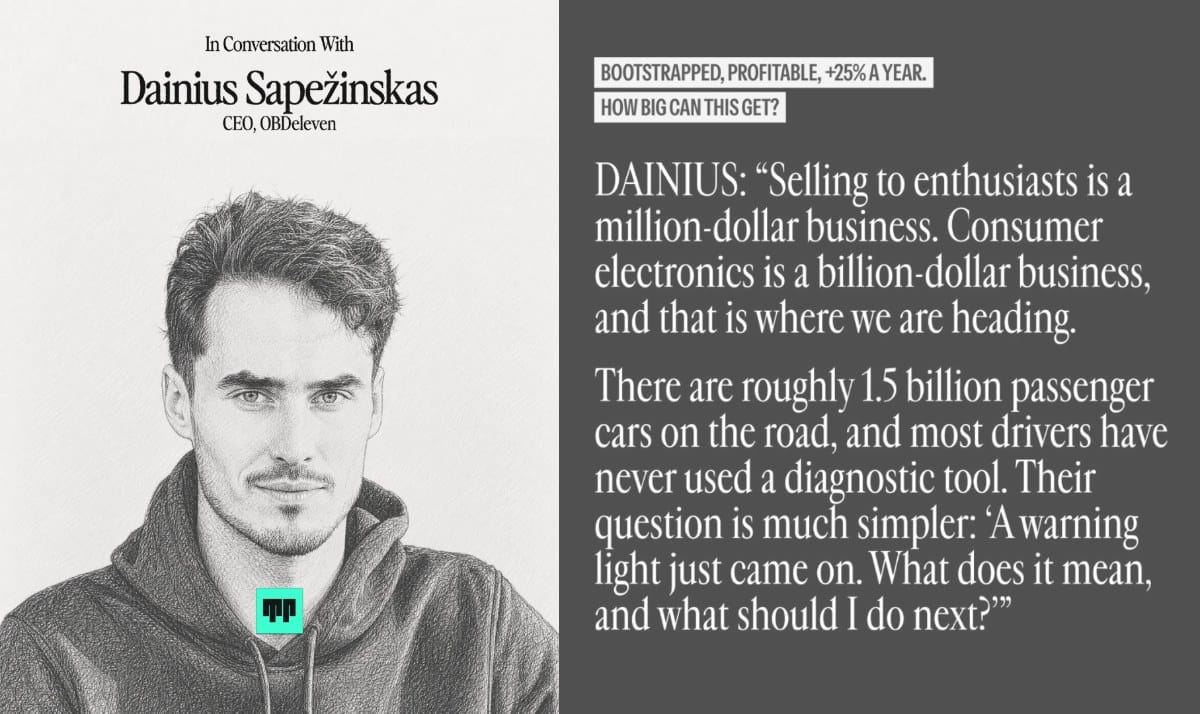
If hardware is new moat, we had to chat to someone riding this wave. Dainius Sapežinskas is the CEO of OBDeleven, bootstrapped scale-up leading with car diagnostic tools - they help every driver diagnose, customize, and improve their vehicles.
Hardware used to be the hard part of the business. Now that anyone can build software, has the device become your moat?
Yes, although we did not always see it that way. For years, we thought of the device as the way into the car and the software as the real product. In the age of AI, that has flipped. A decent app can now be built in weeks. A hardware business cannot. Today our moat is three things working together: licences, hardware and brand.
The hardware is where OBDeleven started. OBDeleven founders were auto electricians who carried heavy laptops out to cars to diagnose and code them, and they wanted that workshop capability in something that fits in your pocket. Today, a device that fits in your palm holds around 150 components. We design it ourselves, from the hardware to the firmware to the app. That means years of engineering, testing on real cars, working with production partners, and managing supply chains and logistics.
The licences come from Volkswagen Group, BMW Group, Toyota Group, Mercedes-Benz and Ford US. They take years of trust to earn, and they let us make changes to a car with the manufacturer’s approval. A copied device cannot offer that.
The brand matters because you are letting a product change your car’s software, and you need to trust it. OBDeleven grew through word of mouth among people who know cars best, and almost 7 million vehicles have connected to it since 2014. That kind of trust cannot be generated.
Each layer makes the others harder to copy.
Bootstrapped, with 25% revenue growth and millions in profits - but what is the opportunity next, how large a company can get, and how?
We grew the business without outside investment, largely by building for people who already knew what an OBD port was. Selling to enthusiasts is a million-dollar business. Consumer electronics is a billion-dollar business, and that is where we are heading.
The bigger opportunity is with people who have never heard of an OBD port. There are roughly 1.5 billion passenger cars on the road worldwide, and even in our strongest markets, most drivers have never used a diagnostic tool. Their question is much simpler: “A warning light just came on. What does it mean, and what should I do next?”
The harder part is that most drivers do not want to think about their car at all. To reach them, OBDeleven is growing from a diagnostics tool into an assistant for the car, a bit like Strava is for running. Diagnostics remains the core: when a warning light comes on, the app tells you what is wrong, how serious it is and what a fair repair looks like. On top of that, it now helps on ordinary days too. It logs your trips, tracks fuel and running costs, reminds you about maintenance and shows battery health on electric cars.
roleplay
Cloudvisor - Cloud Sales & Alliance Manager
Nord Security - Agentic Product Manager
Hostinger - Head of Affiliates
Source / Oxylabs - Head of Partnerships, Head of Marketing
Eldorado - Head of Legal
Eneba - Affiliate Marketing Team Lead, Head of Finance
Surfshark - Head of Growth
VIALET - Underwriting Team Lead, Engineering Manager
Pamatai, Lithuanian Investigative Journalism Award - Director
IPXO - Head of Infrastructure Operations
Rhia Skin - Founding Hardware Engineer
Finbee - International Expansion Manager
brand + design
Slop gets caught. Mid gets approved. The risk is that acceptable work slowly makes a brand less distinctive.
As making things becomes cheaper, a design system alone isn’t enough. It needs to connect to the broader brand: positioning, voice, visual identity, and the reasoning behind creative decisions.
AI can help apply that foundation across everything a company makes. But repeating approved patterns only gets you so far.
The bigger opportunity is to free designers from repetitive production so they can develop new ideas, then feed their best work back into the brand system. The brand stays recognizable while continuing to evolve.
ecosystem
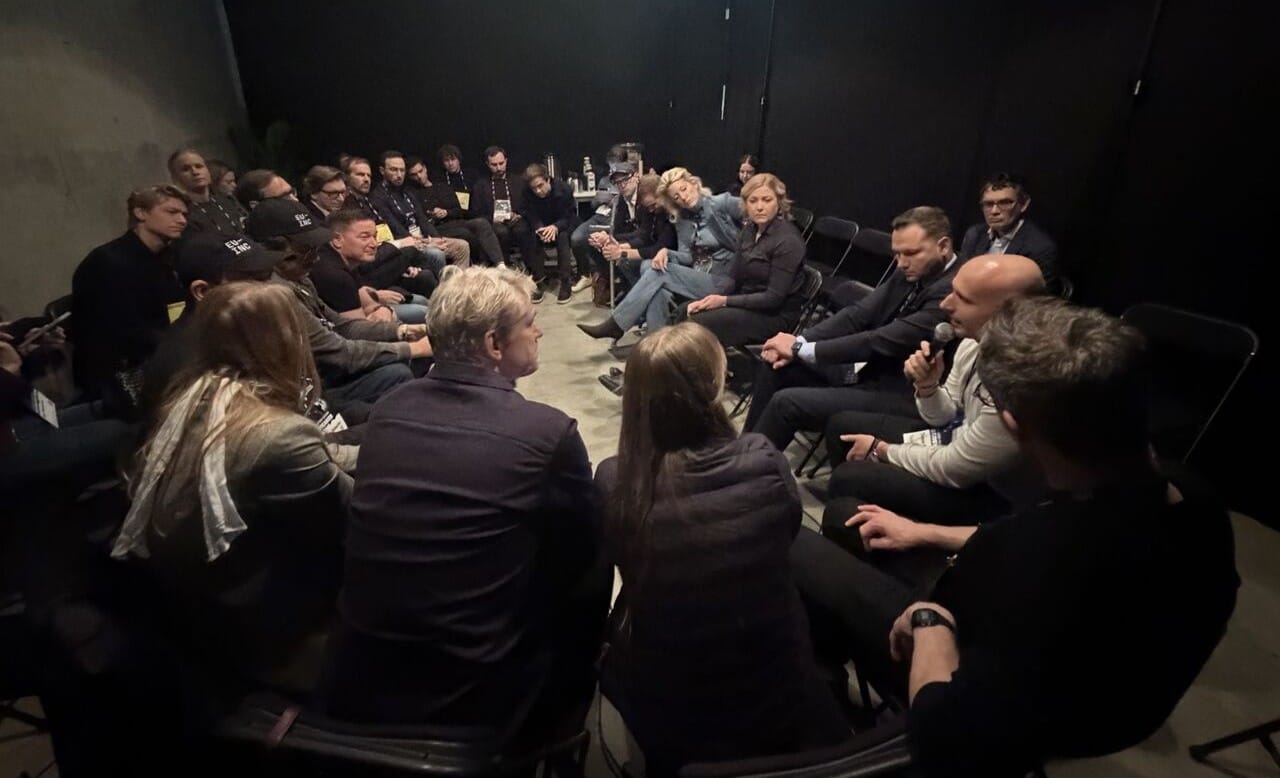
Baltic founders are stepping up to fix Europe - Tomas (Nord Security) and Markus (Bolt) signed Joint Declaration in Slush to fix EU Inc, and bringing people to Vilnius next.
founders guide
Request for startups. Besides YC lists, Draper’s list is short, and includes Interspecies Communication, New countries, and Electromagnetic rocket launches. Think bigger.
”Bumbition” — some top people don’t spend their lives grinding non-stop. “For a significant portion of their life, a bumbitious person doesn’t strive hard, or apply themselves to definite goals…until a clear and compelling opportunity presents itself.” Was Steve Jobs best example of this?
Member discussion