
Departing products to market

Brand built with achoo studio, check philomaths.tech
Follow on Instagram, X, LinkedIn
Newsfeed: to help you track what’s happening in Baltic tech and global tech that matters to builders here. No algorithms. No AI-curated feed. Just people who build things, following other people who build things, and surfacing what’s worth your attention.
Read this issue online + send an email - editor@philomaths.tech
work in progress
Launches. Backed by Tesonet, trendos is live: will help marketers to understand how their brands appear at LLMs. Elvinas building Rikta: AI that plugs into agency's workflow, captures work automatically, and bills clients. Justas built Nosinė: Lithuanian keyboard for iphone. Vilius accumulated a ton of ecommerce knowledge throughout the years - built 110 point Shopify CRO audit for others. Giedrius in SF re-introducing Exante via video. Priidu, former Head of Design at Skype, is also vibecoding well. Gintaras, 17yr old builder, made Time to Talk.
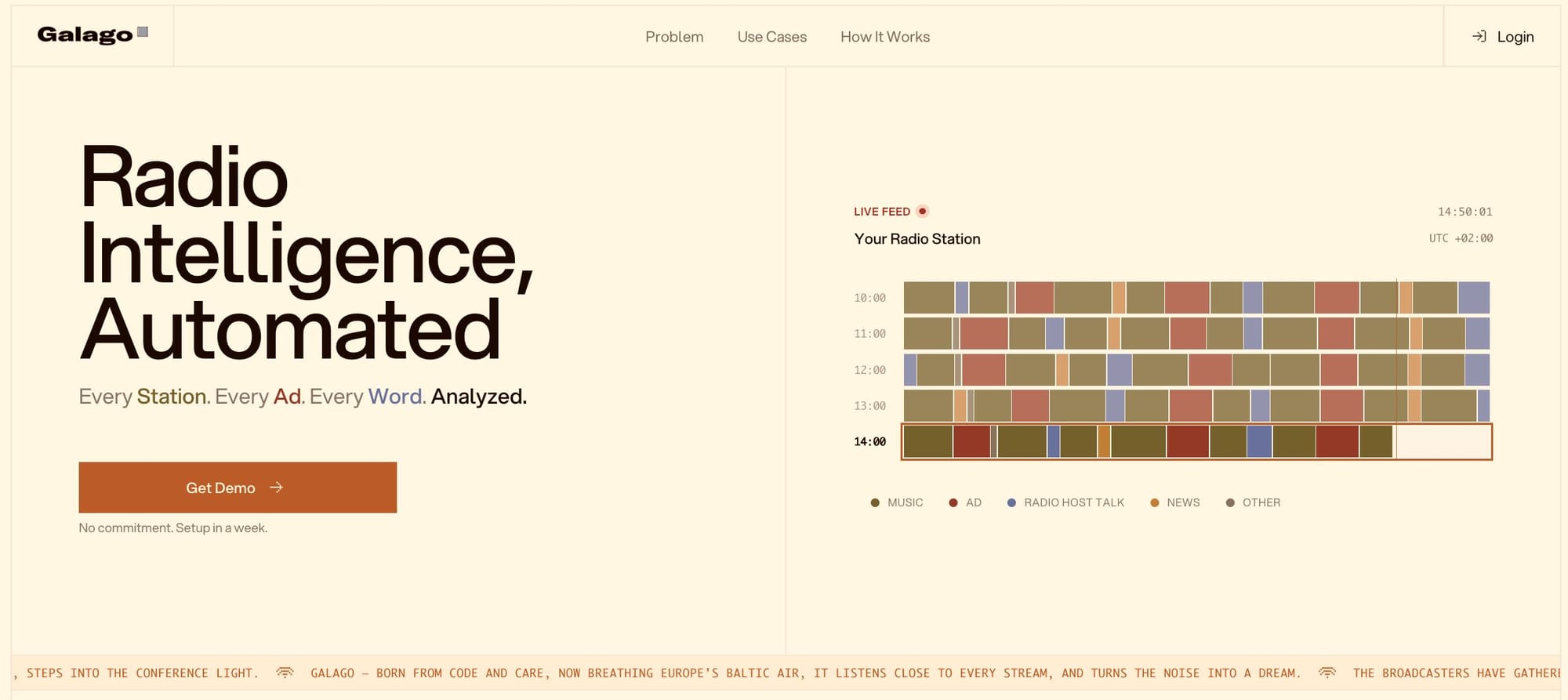
Radio + AI. Radiodays Europe receiving builders from the Baltics. Galago FM, radio intelligence product, was launched by Tomas and the team right in time. 15min team, pushing new horizons with M1, was there. Latvian Spotwise was there, too. Not radio, voice, real-time AI interpretation - Eriks building Everspeak.
FDE is the new FTE? As forward deployed engineer demand skyrockets, Ace Waves explain why this the method need (for agents to replace labour); April 2nd AI meetup in Kaunas and here is Antanas Baksys selling power banks already when he is 14.
"Has all the cards". Justas turning around Whatagraph - from 120 to 40 FTEs, but positive EBITDA and all other fun. Lauri got accepted to YC after 4 attempts, and - turned it down:
by the time they said yes, we'd already figured most of it out ourselves, we had real revenue and a strong understanding of our market. four rejections will do that to you.
we found something that fit us better. 10 companies instead of 200.
Deeply vertical. Always fascinated by founders who embed themselves deep, all the way to culture and style, into their domain. Goramp warehouse staff having fun, and revenue follows.
Highly sustainable. Why Key Carbon chose to back InSoil? What Favonius Energy will do with our buses in Vilnius?
People. As Julius steps into the Board role, Oxylabs group welcomes new CEO — Vytautas Savickas. Vaidotas Juknys will be leading Decodo (Oxylabs is seriously accelerating). After 10 yrs in London, Ieva is back in Vilnius. Paulius is now Director of Product at Vinted Pay. Indre joins Kiloverse as Chief People Officer.
Calendar. Startup meetup next Tue. Entrepreneur First in Vilnius - Mar 31st.
sponsors
Cloudvisor [now offering stress-free migration from any cloud to AWS]
Hostinger [online presence accessible to everyone worldwide, hiring]
Google For Startups [cloud credits up to $350K, faster growth]
Oxylabs [Step into the world of web data gathering]
VIALET [Business accounts for growth, hiring]
Ace Waves [Enterprise ready AI agents for CS, hiring]
Surfshark [Top 50 among fastest growing in EU, hiring]
15MIN Group [all the news you need to know]
Eldorado.gg [world’s largest in-game trading marketplace, hiring]
Saily [eSIM data for international travel, hiring]
rounds and capital
Giraffe360 raises $10M Series B, led by Cipio Partners - impressive Latvian company marching ahead.
Unmanned Defense Systems and ILTE Lietuva have signed a loan agreement to finance working capital – EUR 4.67M worth.
Tesonet Foundation invests €100K in Vedliai to co-develop AI literacy for teachers
Talking M&A, not so much in tech: TopSport gets acquired with EUR 65M EBITDA, rumored very high multiples.
three questions
Saily is sailing away: accelerating rapidly following market demand. Ignas Paplauskas told us more about AI-native engineering (full interview here)
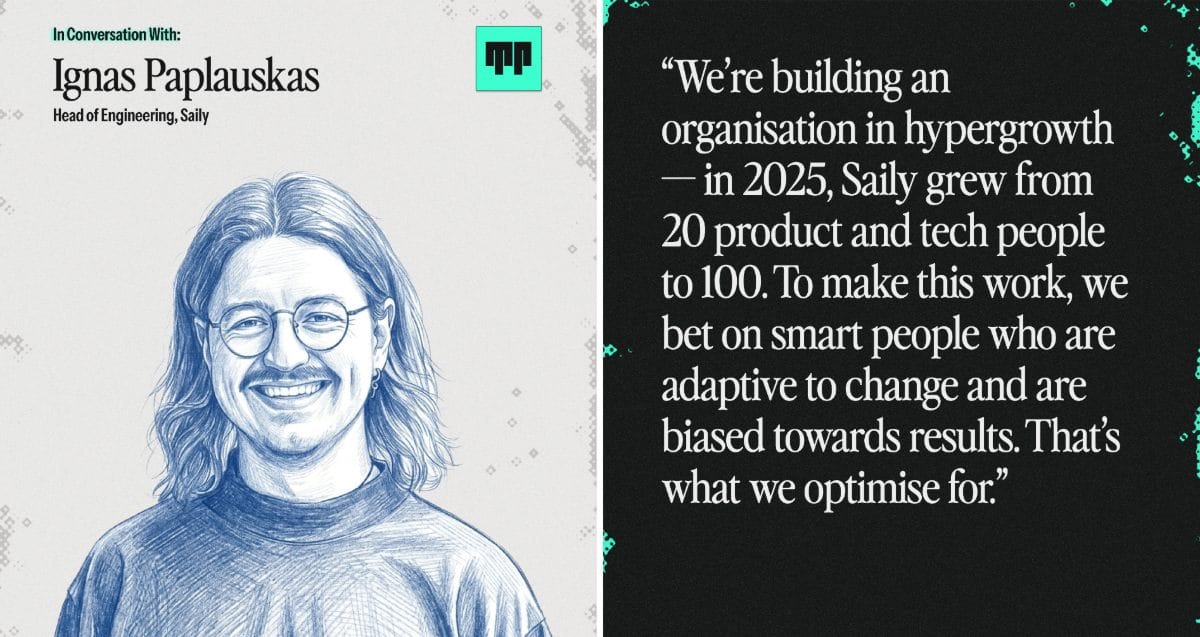
Explain the AI-first engineering shift - how does it look for Saily?
I want to start by sharing how we actually kicked off our transformation into agentic engineering. I felt that we were in the same spot as many others in the industry — reading LinkedIn posts claiming that "software engineering is dead," seeing crazy examples of someone building a browser in a record time, acknowledging that AI agents are a groundbreaking technology. That being said, constantly seeing all the excitement on social media has desensitized everyone — due to clickbaity articles, people (myself included) got overwhelmed and turned skeptical. Even though this technology is clearly the future, due to our sense about it, we moved with caution rather than shifting our entire engineering strategy to it and going all in.
We kicked off big changes after visiting Silicon Valley this February — I went there with a goal to better understand what's happening in the market. The general mood in San Francisco is that everyone's caught up in a feverish gold rush, trying to spin out "AI x [anything]" businesses. I've had the opportunity to talk to a bunch of builders, from fresh solopreneurs to engineers at Meta and Uber, successful startup founders, VPs of engineering, and the creators of the Agile Manifesto (literally). The picture became clear, and my mind was changed. Even though no one has it figured out, and no one knows where the industry is headed, AI agents are not the future, they're the present — you just have to get it right and apply them where it makes sense. I've found various businesses that have already implemented very specific agent applications in smart, practical ways.
To start our changes, we clearly stated to our whole team that we were doing this for actual gained value, not to chase the hype, and we did an AI workshop day where everyone (product people, designers, QAs, devs) had to set up Claude Code and fix at least one bug of their choice. A couple weeks later, we already had a dedicated Agentic Taskforce to implement company-wide changes, while engineers in those teams built their own tooling for specific tasks. We've made good progress with increasing code generation effectiveness and moved the bottleneck to the next phase, which is code review. After resolving reviews, we'll move to CI and monitoring, and we'll finish with product signals — collecting various user feedback from X.com, etc., and generating customer insights. That's what OpenAI Codex is solving, according to their leads (and let's be honest, by the time you read this, they've probably solved it).
So, in a month we have:
- All of our engineers using agentic coding, implementing changes for other platforms than their own (iOS engineer coding backend, Android doing iOS, etc.),
- QAs oneshotting bugs rather than only identifying them
- Agents investigating outages, collecting release notes, and making calls.
Not too shabby for 4 weeks.
So where do we go from here? Two directions — one for software engineering, one for the organization overall. For software engineers, there's still a lot of areas to agentify. The role itself is already shifting to a full-stack builder in smaller teams, with more covered technologies by a single engineer, fewer handoffs, and closer proximity to customer problems. For the rest of the org, there's even more surface to apply agents, and the potential impact to everyone's work might be even higher than engineering. There are companies that already have AI ops people who work on identifying areas to introduce agents and implementing them. I see us doing the same — removing the tedious parts of work, leaving headspace for focusing on reaching results. I believe that the capabilities for agents will drastically increase every 6 months. The opportunities of what we can do are already huge, and the future will be even more exciting. // full talk here
roleplay
VIALET - Senior Product Manager (Acquiring)
Eldorado - Head of Engineering, Fraud and Risk Manager
Ace Waves - Agent engineering and Software engineers
Surfshark - DevOps Team Lead (Incogni)
Saily - rapidly growing - 30+ positions
Oxylabs - Head of Customer Experience + many
Cloudvisor - Outbound sales, more sales jobs
Google Cloud - Customer Engineer
Greet - Sales Manager and Accountant
Vedliai - Senior Product Designer
brand + design
”The premature sheen” is killing quality. Rem Koolhaas (One of the most influential living architects) coined the phrase "the premature sheen.” The premise: You can make anything look really good really quickly. Things that look like great work. But it doesn’t make them good, because it misses the underlying thinking. This is the sharpest articulation of what is happening to design and brand right now.
Taste-first decision-making isn't free. It's funded by margins. Financial and psychological. The most important decisions are taste decisions that data later confirms or fails to measure. DHH (37signals co-founder, Ruby on Rails creator) kept a data scientist on staff for over a decade. The honest admission: they never once followed the numbers when the numbers disagreed with their instinct.
Everything you need to know about taste and how to cultivate it is in this conversation. The word "taste" never comes up once. It's a conversation about attention, feelings, craft, and why the premature sheen kills good work.
founder's guide
Follow the pull.
further insights
Vilnius photography. Big fans of how Andrej Vasilenko captures Vilnius, now he is available to teach others.
LLMs started as huge bundles, horizontal tools - and now unbundling, going vertical to win B2B sectors.
FT VS a16z = 1:0
ecosystem
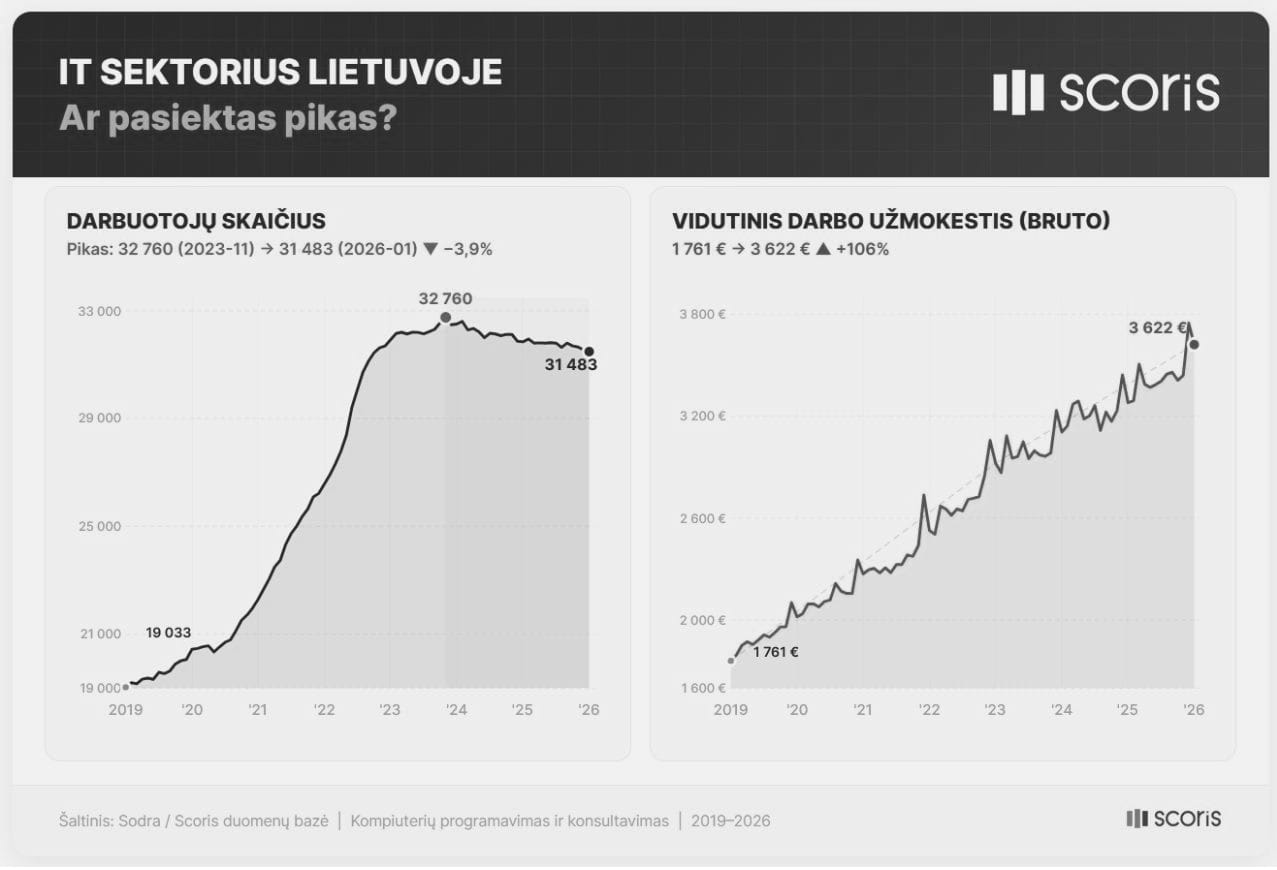
IT market. Antanas suggesting IT sector has peaked in LT, but inside it is more complex: talent moves from large corps and IT centers into startups and scale-ups (almost 20k of staff), part of tech / startups is not under "programming category” but e-commerce, deeptech, etc.
Member discussion